






Long flights into Singapore are a common cause of swollen, aching legs. Usually this settles within a day or two of walking around. But if one leg stays swollen, painful or warm, it may be a deep vein thrombosis (DVT), a blood clot in a deep vein. DVT needs a medical assessment, even when you are only visiting.
This guide explains the signs to look out for, when to seek emergency care, and how visitors can arrange a vascular assessment in Singapore.
What is DVT, and why do long flights matter?
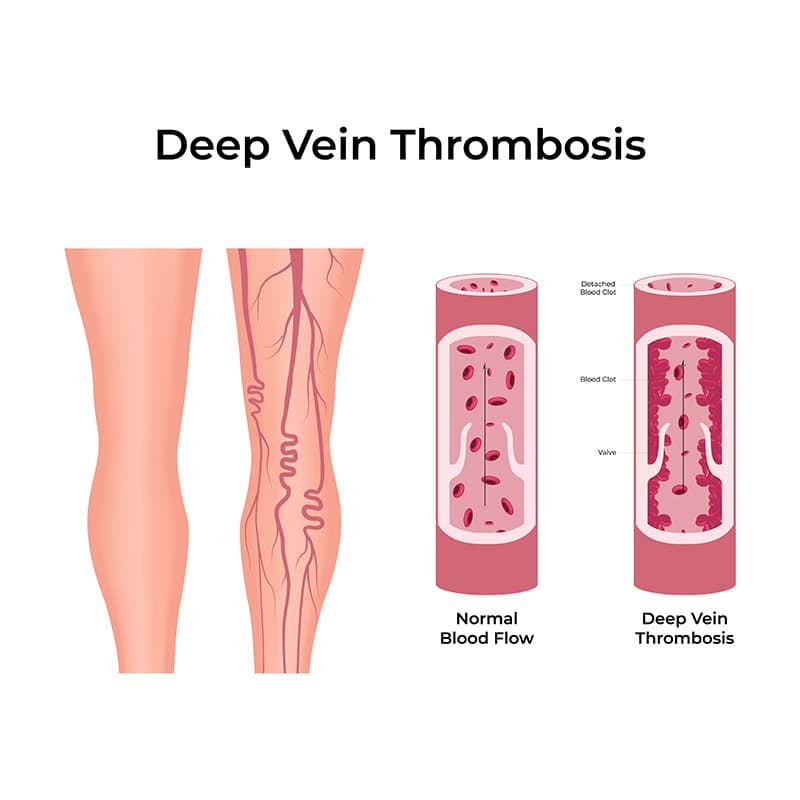
DVT is a blood clot that forms in a deep vein, most often in the calf or thigh. The main concern is that part of the clot can break off and travel to the lungs. This is called a pulmonary embolism (PE), and it is a medical emergency.
On a long flight, you sit still for hours with your knees bent. Blood flows more slowly through the leg veins, and the cabin air is dry. Together these raise the chance of a clot forming. The risk is mainly linked to flights of about four hours or more, and it rises with longer journeys and connecting flights.
DVT can happen in any cabin class. Economy seats leave less room to move, but we also see DVT in travellers who flew business class. The main factor is sitting still for hours, not the seat.
A clot does not always cause symptoms during the flight. Symptoms can appear hours, days or even a couple of weeks after landing, so they may start while you are on holiday.
DVT and other flight-related health problems
DVT is one of several health problems linked to air travel. The most common include:
1. Fainting and dizziness (syncope)
2. Stomach and digestive problems
3. Breathing problems
4. Heart problems, such as a heart attack
5. Deep vein thrombosis
Common triggers include changes in cabin air pressure, low cabin humidity, and lower oxygen levels in the cabin air (hypoxia).
Symptoms to watch for
DVT often affects one leg, but it can occur in both legs. Common signs include:
• Swelling in one calf, ankle or thigh that does not go down or raising the leg
• Pain, tenderness or cramping, often in the calf, which may feel worse when standing or walking
• Skin that feels warm to the touch
• Redness or darker discolouration of the skin
• Veins near the surface that look more prominent than usual
Mild ankle swelling after a flight is common and usually settles within a day or two of moving around. Swelling or pain that does not settle, is worse in one leg, or keeps getting worse should be checked by a doctor, even if both legs are affected.
Some people with DVT have few or no symptoms at all. If you have risk factors and feel something is not right, it is reasonable to get checked.
When to go to A&E or call 995
Some symptoms may mean a clot has reached the lungs. Call 995 or go to the nearest hospital Accident & Emergency (A&E) department straight away if you have:
• Sudden shortness of breath
• Chest pain, especially pain that gets worse when you breathe in
• Coughing up blood
• A fast heartbeat, light-headedness or fainting
Also seek emergency care for a leg that suddenly becomes cold, pale, numb or very painful. This can be a sign of a blocked artery rather than a vein.
Do not wait for a clinic appointment if you have any of these symptoms.
Who is at higher risk?

Most travellers will not develop DVT. Your risk is higher if you:
• Have had a DVT or pulmonary embolism before, or have a family history of blood clots
• Have had recent surgery or an injury, especially to the legs or hips
• Are pregnant or recently gave birth
• Take oestrogen-containing medication, such as the combined contraceptive pill or hormone replacement therapy
• Have active cancer or are receiving cancer treatment
• Are older, or are carrying excess weight
• Have reduced mobility, or have a leg in a cast
• Have large varicose veins
• Drink too much alcohol or become dehydrated during the flight
If any of these apply and you notice symptoms, get checked sooner rather than later.
Injured while travelling and flying home?
An injury combined with a long flight raises the risk of DVT. If you were injured abroad and are being repatriated, or are flying home after an injury, DVT should be ruled out before you fly. This is especially important if the injured arm or leg has become swollen. Any limb swelling after an injury should be checked for a vein problem.
Getting assessed in Singapore as a visitor
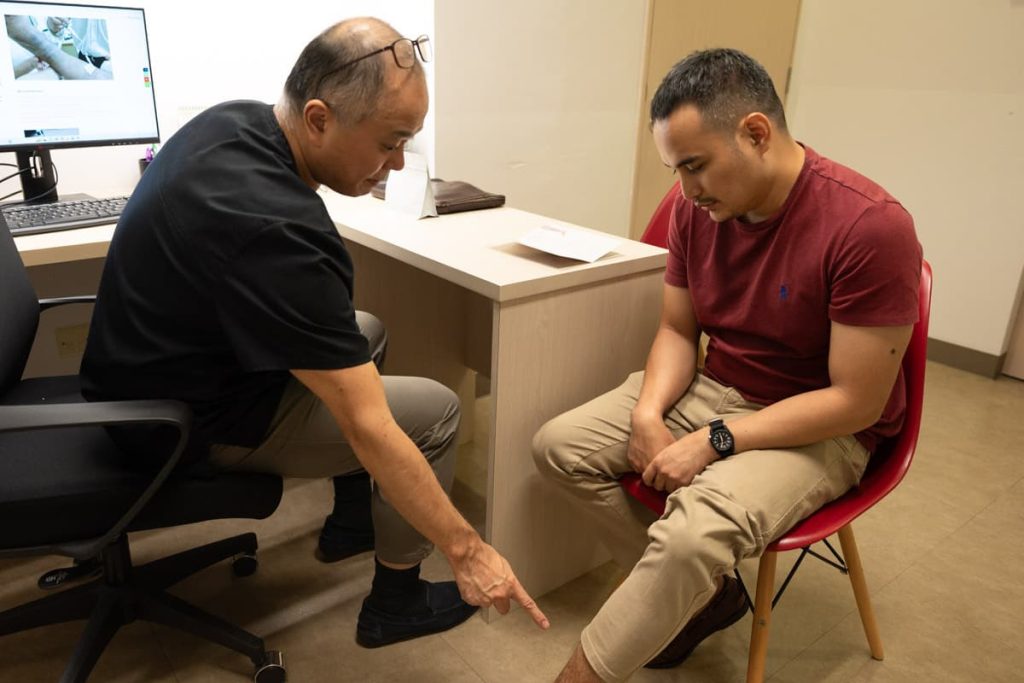
You do not need to be a Singapore resident or have a local GP referral to see a vascular specialist at our clinics. Contact us and tell us you are visiting Singapore with leg symptoms after a flight.
What happens at the visit.
The specialist will ask about your flight and symptoms, and examine your legs. A duplex ultrasound scan is the usual test for DVT. It is painless and uses sound waves to show blood flow in the veins. The scan is done at the same visit as your consultation, so you can be seen, scanned and given a treatment plan in one appointment. A blood test called a D-dimer may also be used.
What to bring:
• Passport
• Travel insurance policy details and emergency contact number
• A list of medications you take
• Any previous scans or medical reports, if you have them
• Your flight dates, including your planned return
Payment and insurance.
DVT assessment and treatment are usually covered by travel insurance. Pay at the clinic, then keep your receipts and medical report to submit with your claim.
Treatment and flying home safely
Most DVTs are treated with anticoagulant (blood-thinning) medication taken by mouth. These medicines stop the clot from growing and lower the chance of it travelling to the lungs, while the body gradually breaks the clot down. Many patients do not need to stay in hospital.
If you are diagnosed with DVT during your trip, your specialist will advise you on:
• How long to take the medication, and how to continue it once you are home
• When it is reasonable to fly again, based on your scan results and how you are responding to treatment
• Whether compression stockings would help on the return flight
• What to do if your symptoms change while travelling
Pertanyaan yang sering diajukan
My ankles are swollen after the flight. Is that DVT?
Mild swelling in both ankles after a long flight is common and usually goes away within a day or two. Swelling that lasts longer, keeps getting worse, or comes with pain or warmth should be checked, whether one leg or both are affected. If you are unsure, get it checked.
How soon after a flight can DVT appear?
Symptoms can start during the flight or up to a few weeks afterwards. Many people first notice them several days after landing.
Can I see a vascular specialist without a referral?
Visitors can contact us directly to arrange an assessment.
Will my travel insurance cover this?
In most cases, yes. DVT assessment and treatment are usually claimable under travel insurance. Keep all your receipts and your medical report, and submit them with your claim.
Can I still fly home if I have DVT?
Many people can, once treatment has started and the specialist is satisfied it is safe. The timing depends on your scan results and overall health, so your doctor will advise you individually.
Should I go to A&E or to a clinic?
Go to A&E or call 995 for breathlessness, chest pain, coughing up blood, fainting, or a cold and painful leg. For leg swelling or pain without these symptoms, contact us to arrange an assessment.
This article is for general information and does not replace a medical consultation. If you have symptoms, please see a doctor.