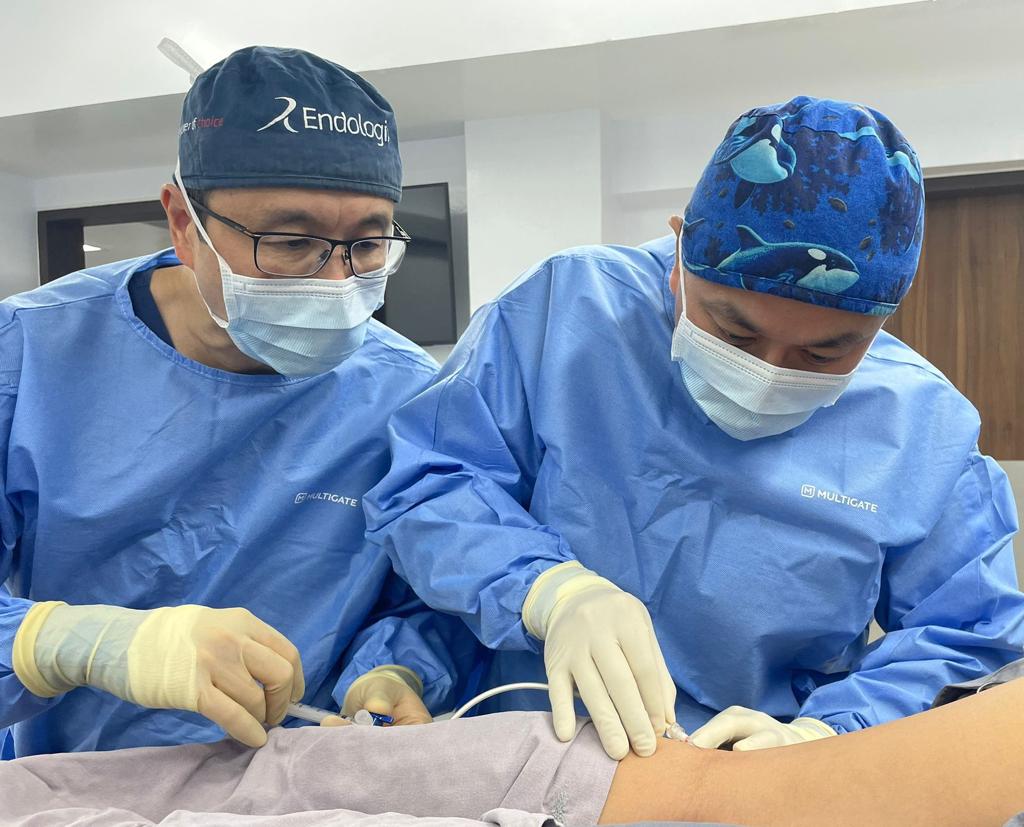





Anyone suffering from a varicose vein problem knows that it can not only look unsightly, but it can also be a source of pain. Swollen veins can also present as finer spider veins, which are also a cosmetic concern. Here, DR TANG TJUN YIP and DR JULIAN WONG CHI LEUNG answer questions about varicose veins causes – and treatments to get rid of them.
How is a varicose vein different to spider veins? And what are spider and varicose veins causes?
A varicose vein problem presents as enlarged, swollen and twisted veins that usually appear on the legs and feet. They occur when the valves in the veins become weak or damaged, causing blood to pool and the veins to stretch, leading to higher pressure in the veins in the legs, or chronic venous insufficiency (CVI). Varicose veins can be blue, red or flesh-coloured and may be accompanied by symptoms such as pain, heaviness, swelling and leg cramps. While they are generally harmless, they can sometimes lead to more serious conditions, such as ulcers or blood clots
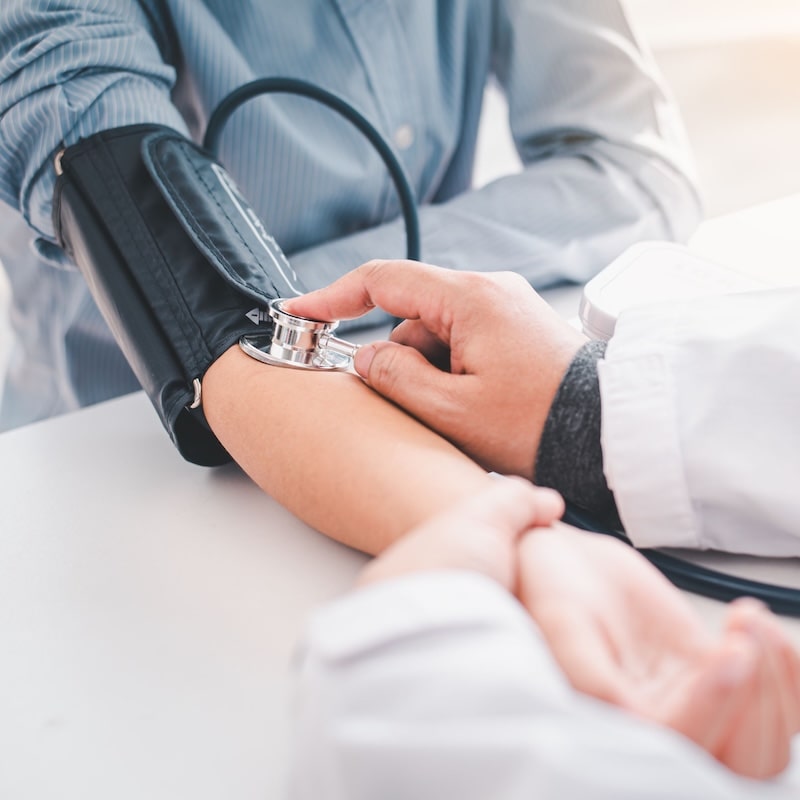
- High Blood Pressure (Hypertension): Increases stress on the artery walls, leading to weakening over time

- Smoking: Damages blood vessels and accelerates aneurysm growth

- Genetic Factors: A family history of aneurysms raises the risk
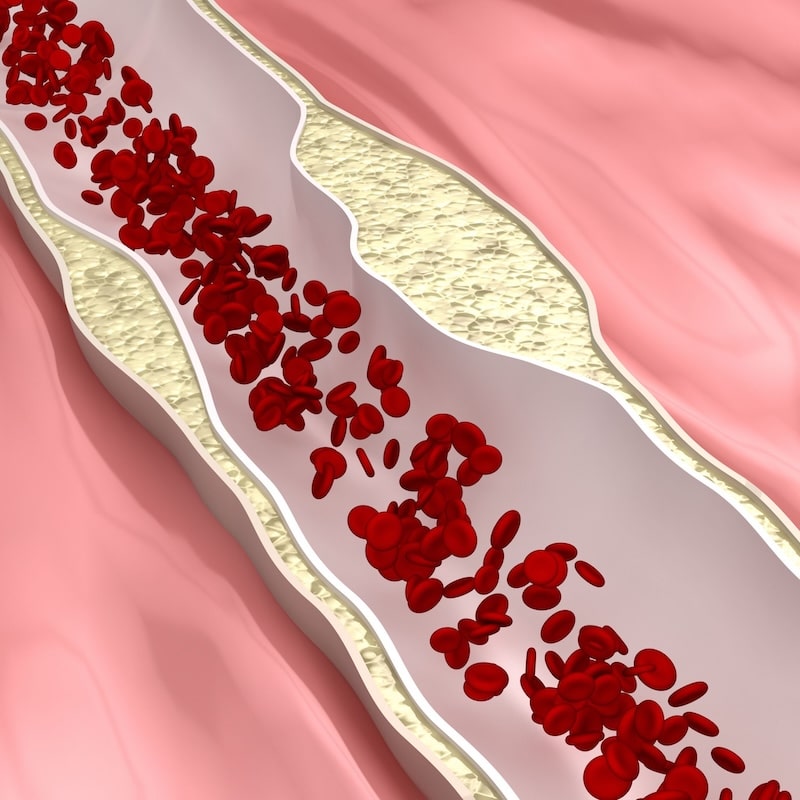
- Atherosclerosis (Hardening of Arteries): Plaque buildup weakens arterial walls
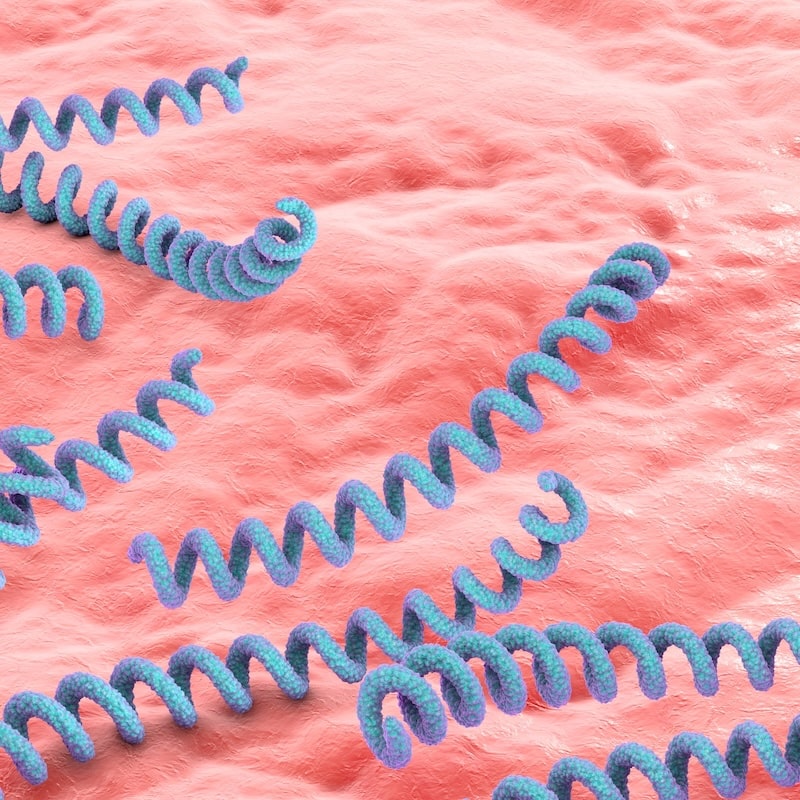
- Infections and Inflammatory Conditions: Rare causes include syphilis, vasculitis and connective tissue disorders such as Marfan syndrome

- Trauma or Injury: Severe chest or abdominal injuries can lead to aneurysm formation
Types of Aneurysm
Aneurysms are classified based on their location and shape:
- Abdominal Aortic Aneurysm (AAA): Occurs in the lower part of the aorta, typically below the kidneys. AAA is more common in men over 60 and those with a history of smoking or high blood pressure
- Thoracic Aortic Aneurysm (TAA): Develops in the chest portion of the aorta and may cause breathing difficulties or chest pain
- Fusiform Aneurysm: A uniform bulging around the entire circumference of the artery
- Saccular Aneurysm: A localised, balloon-like bulge on one side of the artery wall
When Is Treatment Needed
Not all aneurysms require immediate surgery. Treatment depends on:
- Size and Growth Rate: Aneurysms larger than 5.5 cm in diameter or those growing more than 0.5 cm per year require aortic aneurysm surgery
- Symptoms: Aneurysms causing pain, tenderness or compression of surrounding structures necessitate prompt medical attention
- Risk of Rupture: Factors such as high blood pressure, smoking and a family history of aneurysms increase rupture risk
For small, slow-growing aneurysms, aortic aneurysm monitoring is recommended.
This includes:
- Regular Imaging Tests: Ultrasound or CT scans track aneurysm size and growth
- Blood Pressure Control: Medications and lifestyle changes help reduce stress on the aortic walls
- Lifestyle Modifications: Quitting smoking, adopting a healthy diet and exercising regularly support vascular health
Patients undergoing monitoring must follow their specialist’s recommendations to prevent aneurysm progression.
Aortic Aneurysm Treatments
Minimally Invasive Treatment: Endovascular Aneurysm Repair (EVAR)
Endovascular repair, also known as EVAR, is a minimally invasive procedure for treating aortic aneurysms.
- Procedure Overview: A small incision is made in the groin, allowing a catheter to guide a stent graft to the aneurysm site. The graft reinforces the artery wall and diverts blood flow away from the weakened area.
- Benefits:
- Fast recovery and short hospital stays
- Less post-surgical pain and lower complication risk
- Reduced blood loss compared to open surgery
EVAR is a preferred option for many patients due to its effectiveness and quick recovery time.
Open Surgery (Aneurysm Repair)
While minimally invasive techniques are often preferred, open surgery for aortic aneurysm remains necessary for certain cases.
- When Is Open Surgery Necessary?
- Large aneurysms that cannot be treated with EVAR
- Ruptured aneurysms requiring immediate repair
- Patients with extensive arterial damage or complex anatomy
- Procedure Details:
- A major incision is made in the abdomen or chest
- The weakened section of the aorta is replaced with a synthetic graft
- The graft is sewn into place to restore normal blood flow
- Recovery Process:
- Longer hospital stays (typically 5-10 days)
- Extended recovery period of several months
- Higher risk of complications compared to EVAR
Choosing the Right Treatment Plan at The Vascular and Endovascular Clinic (VEC)
Selecting the optimal aortic aneurysm treatment depends on several factors:
- Patient’s Age and Health: Older patients or those with multiple medical conditions may benefit more from minimally invasive options
- Aneurysm Size and Location: Smaller, stable aneurysms may only require monitoring, while larger or symptomatic aneurysms necessitate surgery
- Specialist’s Assessment: Consulting our vascular specialists is essential in determining appropriate intervention
A personalised approach ensures a safe and effective treatment plan for every patient. At the Vascular and Endovascular Clinic (VEC), we provide expert evaluation and tailored treatment strategies based on each patient’s condition, medical histor and risk factors. Our specialists utilise diagnostic tools, including ultrasound, CT scans and angiography, to assess aneurysm size, growth rate and potential complications.
With a focus on evidence-based care, we offer comprehensive treatment options, from close monitoring and medical management to minimally invasive endovascular repair and open surgery when necessary. Our goal is to provide effective intervention while prioritising patient safety, comfort and long-term vascular health.
Timely Treatment and Expert Care for Aortic Aneurysm
Aortic aneurysm treatment is essential in preventing life-threatening complications. Whether through aortic aneurysm monitoring, minimally invasive aneurysm repair or open surgery for aortic aneurysm, timely intervention ensures safe outcomes.
Early detection and expert care can make all the difference in your health and well-being.
If you have risk factors or symptoms of an aortic aneurysm, consult our vascular surgeons today.