



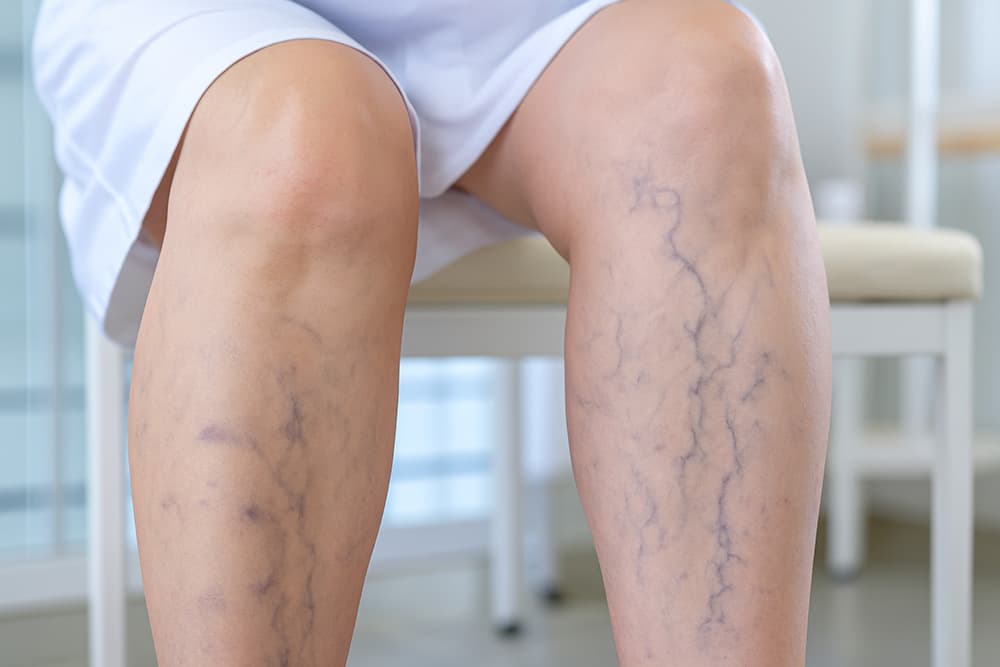
Anyone suffering from a varicose vein problem knows that it can not only look unsightly, but it can also be a source of pain. Swollen veins can also present as finer spider veins, which are also a cosmetic concern. Here, DR TANG TJUN YIP and DR JULIAN WONG CHI LEUNG answer questions about varicose veins causes – and treatments to get rid of them.
How is a varicose vein different to spider veins? And what are spider and varicose veins causes?
A varicose vein problem presents as enlarged, swollen and twisted veins that usually appear on the legs and feet. They occur when the valves in the veins become weak or damaged, causing blood to pool and the veins to stretch, leading to higher pressure in the veins in the legs, or chronic venous insufficiency (CVI). Varicose veins can be blue, red or flesh-coloured and may be accompanied by symptoms such as pain, heaviness, swelling and leg cramps. While they are generally harmless, they can sometimes lead to more serious conditions, such as ulcers or blood clots
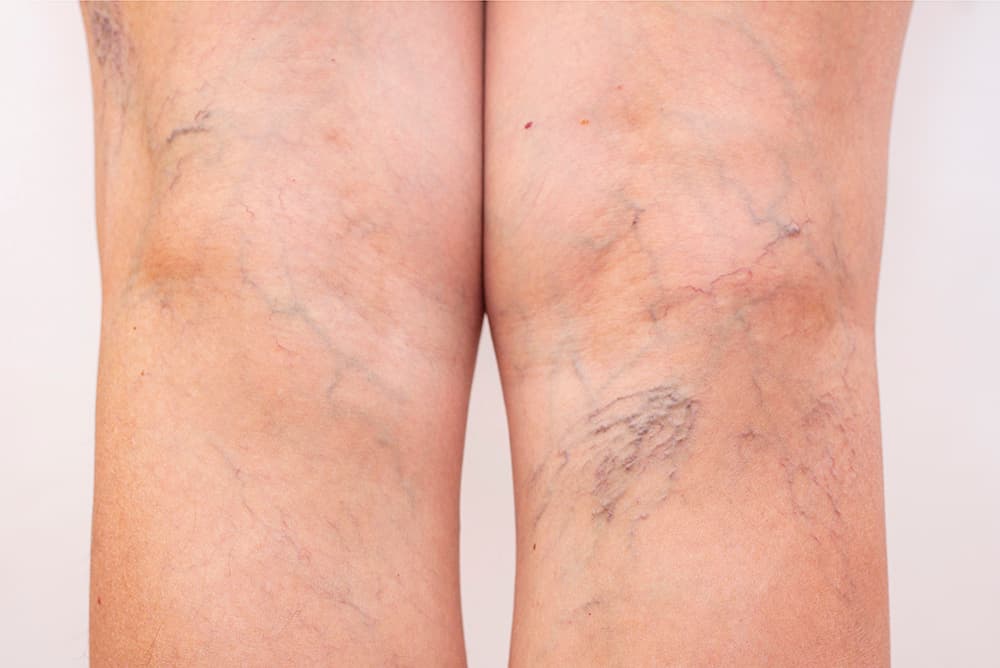
Spider veins, also known as telangiectasias, are similar to varicose veins but are smaller and less severe. They are a cosmetic concern and appear as thin, web-like networks of red, blue or purple veins on the surface of the skin, usually on the legs or face. Unlike varicose veins, spider veins are not typically swollen or raised and do not cause significant pain or discomfort. They can both be influenced by factors such as genetics, hormonal changes, pregnancy, obesity and prolonged periods of standing or sitting.
What is the first step to removing an unsightly varicose vein and other swollen veins?
Spider vein treatment is focused on improving cosmetic appearance, often with sclerotherapy (injections to close off the veins) or laser (Candela) therapy. But first we check whether the underlying truncal veins are faulty by performing a Duplex ultrasound scan. This is a non-invasive 20 minute scan that shows the extent and severity of valvular reflux (or malfunction of the valves) in the vein walls.
If present, truncal reflux in the main surface veins needs to be sorted out first. Otherwise any treatment of the spider veins will need to be repeated when the inflow problem causes them to recur. This can be done using a keyhole procedure such as laser, radiofrequency or microwave ablation, and can be performed as a day procedure under local anaesthetic with minimal downtime and pain. This is usually covered by medical insurance as it’s a medical problem. Patients walk out of the hospital the same day and are back to their normal daily routine within 24 to 48 hours.
What’s the next stage to improve the cosmetic appearance of spider veins?
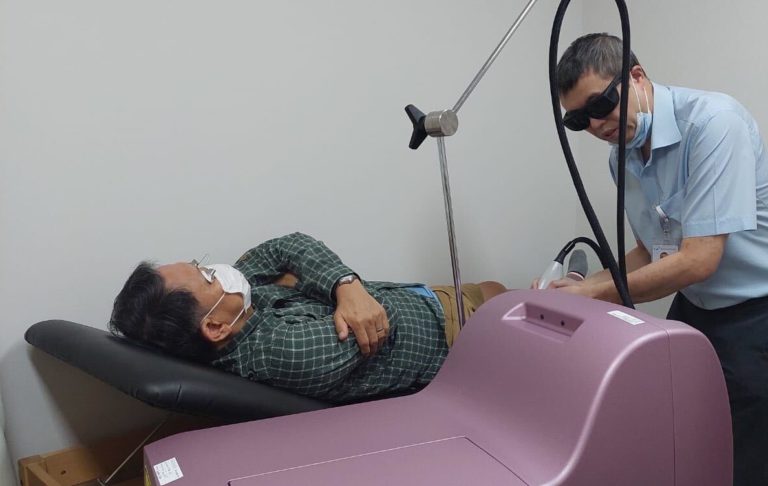
The Candela laser is a popular and particularly effective treatment. It can selectively target the damaged blood vessels without damaging the surrounding skin. The laser is beamed over the affected area, and it emits a specific wavelength of light that is absorbed by the pigment in the blood, allowing for precise and controlled treatment. The heat generated by the laser causes the blood vessels to collapse and eventually be absorbed by the body.
What should a patient expect when having Candela laser?
The procedure is relatively quick with minimal discomfort and downtime and can be done in the clinic setting without any anaesthetic. At The Vascular & Endovascular Clinic (VEC) we normally give Candela treatment complimentary to our patients after their truncal reflux is dealt with as we appreciate that this part of the treatment is cosmetic and not covered under insurance.
What is the downtime like?
After Candela treatment, the patient will have mild redness over the area treated due to inflammation. This is a natural response and it will take about ten days to subside. In the meantime, the patient applies a repair cream three times a day for two weeks to help all the discolouration disappear. The treatment can be repeated again every four weeks if there are any residual spider veins. It normally takes one or two treatments for near complete eradication.
How are compression stockings used to help recovery?
They are routinely used after varicose vein surgery as evidence-based medical practice. Post-op there’s some swelling inside theleg and stockings help these issues settle down faster. Also, there’s a condition called thrombophlebitis (inflammation of the veins), which happens to the normal veins near the treated veins. Wearing stockings for the first week helps to prevent this from happening. We recommend to continue wearing stockings for a second week to help recovery.
In what other situations do you recommend compression stockings?
For air travel because the blood in the veins stagnates due to lack of gravity. Compression stockings help the blood to move from the legs back to the heart.
We also recommend daily use for patients with mild vein disease experiencing cramps and leg swelling, to ease symptoms while considering surgery. And they’re great for people with jobs that require prolonged standing like teachers, chefs, sales-assistants, nurses and policemen. Stockings help prevent the development of varicose veins.
Meet Our Vascular Surgeons
Dr Julian Wong and Dr Tang Tjun Yip are Senior Consultant Vascular and Endovascular Surgeons with over 60 years of combined clinical experience. Both completed fellowship training in vascular surgery and held senior leadership roles in Singapore’s public healthcare system before founding The Vascular & Endovascular Clinic.
They treat both arterial and venous conditions, offering open surgery and minimally invasive endovascular procedures, with a treatment plan tailored to each patient.

Dr Julian Wong
Medical Director, Senior Consultant Vascular & Endovascular Surgeon
MBChB, FRCS (Glas), FRCS (Eng), FRCS (Gen), FAMS
Dr Wong has more than 35 years of medical experience, including over two decades as a consultant. He was previously Head of Vascular & Endovascular Surgery at the National University Heart Centre, Singapore, and Director of its Aortic Centre and Vascular Laboratory. He also helps train and assess the next generation of surgeons. He is Chief Examiner for the Membership of the Royal College of Surgeons, Chairman of the Master of Medicine in General Surgery, and an examiner for the Fellowship of the Royal College of Surgeons.
Dr Tang Tjun Yip
Medical Director, Senior Consultant Vascular & Endovascular Surgeon
MA (Hons), MB BChir (Distinction in Surgery), MRCS (Glas), MD (Cambridge), FRCS (Gen), FAMS, CWSP
Dr Tang trained at the University of Cambridge and completed an endovascular fellowship in the UK, followed by further training in Sydney. He was formerly a Senior Consultant in Vascular Surgery at Singapore General Hospital, where he set up the deep venous stenting programme in 2018. He also helped establish the vascular service at Sengkang General Hospital. As Director of Research at the SingHealth Duke-NUS Vascular Centre, he became the first vascular surgeon in Singapore to receive a Clinician Scientist Award, for research on improving outcomes in diabetic foot and peripheral artery disease.